
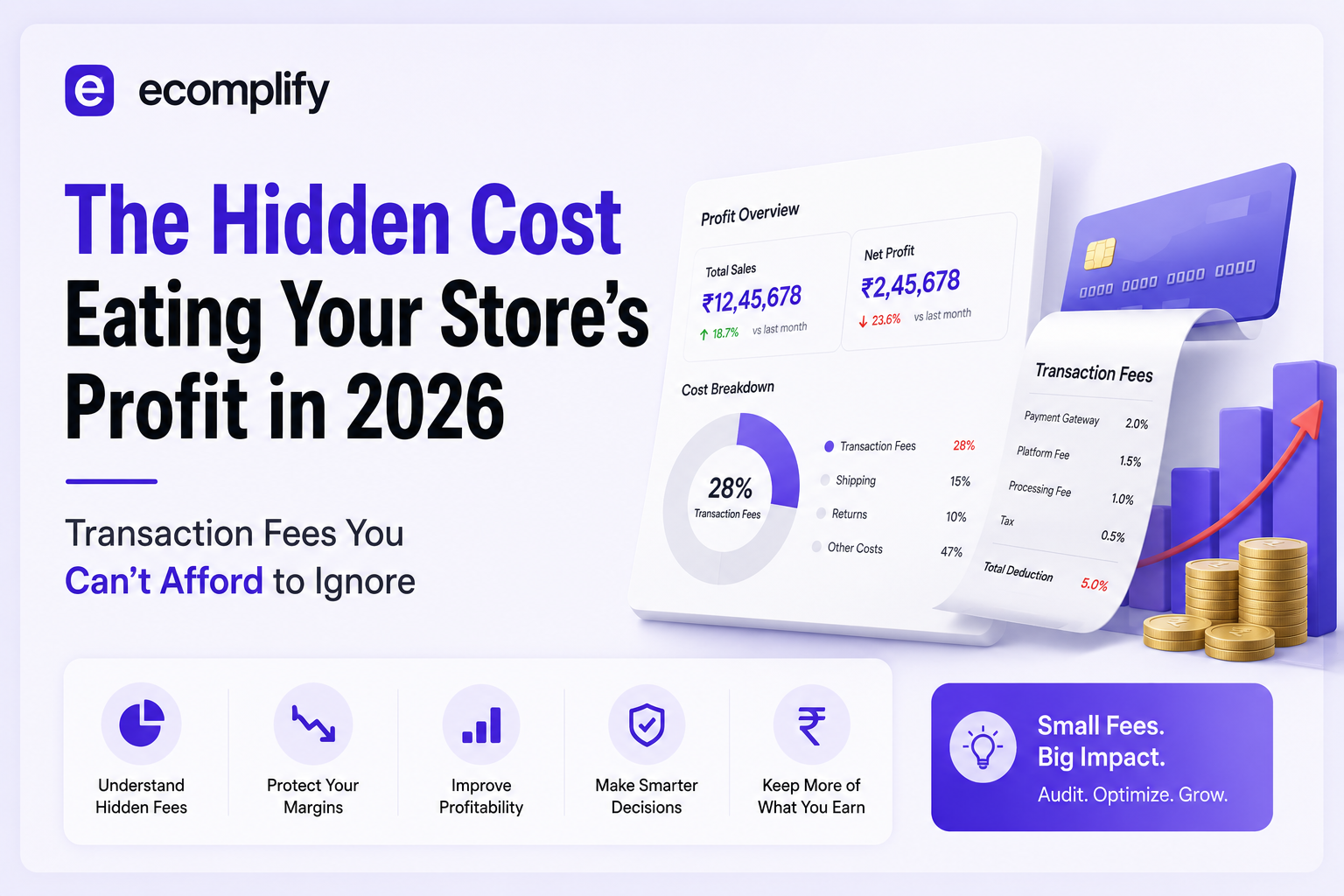
The Hidden Cost Eating Your Store's Profit in 2026: Transaction Fees
You can pour money into ads, perfect your product photos, and still watch your margin shrink for a reason most merchants never put on a spreadsheet: the fee that gets taken out of every order, before the profit ever reaches you.
Two very different fees hide behind the words "transaction fee," and confusing them is costing brands real money in 2026.
The Two Fees You're Actually Paying
1. The payment processing fee. This is what your gateway Stripe, PayPal, Adyen, or your regional provider charges to move money. It's roughly 2–3% plus a small fixed amount per order, and it's unavoidable. Every platform on earth pays it, because someone has to process the card.
2. The platform fee. This is the extra cut your store platform takes on top of the gateway fee, just for letting you sell. It's the one nobody talks about and the one you can actually do something about.
That second fee is where the leak is. On some platforms it runs up to 2% of every order unless you use their in-house payment product. On a store doing $100,000 a month, a 2% platform fee is $2,000 every month $24,000 a year handed over on top of normal processing, for nothing you can see.
Run Your Own Numbers
Here's the quick math every finance team should do once:
- Take your average monthly sales.
- Multiply by your platform's extra transaction fee (check the fine print it's often "0% only if you use our payments").
- Multiply by 12.
That number is your annual platform tax. For a lot of scaling brands it's larger than their entire email-marketing budget. It scales with success, too: the more you sell, the more it takes.
Four Ways to Stop Overpaying
Separate the two fees. Ask your platform plainly: "What do you charge per sale, on top of my gateway?" If the honest answer isn't 0%, you've found money.
Don't get locked into one payment product. A platform that only waives its fee when you use their checkout is charging you for flexibility. Keep the freedom to use Stripe, PayPal, Apple Pay, Google Pay, Klarna, or Adyen whatever converts best for your customers in each market.
Watch the fixed per-order fee on low-ticket items. A flat 30¢ on a $5 order is 6%. If you sell low-ticket SKUs, nudge average order value up with bundles and free-shipping thresholds.
Reinvest the savings where they compound. Money you stop losing to fees is margin you can put back into retention email, loyalty, faster shipping which keeps paying you long after a single ad click is gone.
Keep More of Every Sale
At Ecomplify we made a deliberate choice: 0% platform transaction fees. You pay only your payment gateway's standard processing the same fee you'd pay anywhere and we never take a cut of your sales, on any plan. Connect Stripe, PayPal, Apple Pay, Google Pay, Klarna, or Adyen and keep what you earn.
Curious what the difference looks like for your numbers? Our savings calculator shows it in seconds and if you're weighing your options, the full comparison lays the fees out side by side.
Ads get the attention. But the fastest margin win in 2026 might just be the line item you've never looked at.
Last updated August 5, 2026